Health & Safety Policy — Flat Clearance Ealing
 Flat Clearance Ealing maintains a clear, written health and safety policy that applies to all aspects of our flat clearance and waste removal operations. This policy sets out how we manage risks associated with rubbish removal, waste transfer and on-site operations within our rubbish company service area and associated service zones. The purpose is to protect staff, clients, contractors and the public by defining responsibilities, safe systems of work and the standards we expect in every clearance job.
Our policy covers the scope of services we provide, including domestic and commercial flat clearances, hazardous item handling and bulky waste transportation. It applies equally across the entire rubbish collection service area we operate in and extends to temporary storage points, vehicle loading areas and any client premises where work is undertaken. We commit to comply with relevant legislation and industry-best practice while striving to improve safety performance through regular review.
 Responsibilities are delegated across the organisation and each team member has a defined role. Management is responsible for providing resources, carrying out risk assessments and ensuring that training, equipment and supervision are in place. Supervisors must implement safe systems, monitor compliance, and report incidents promptly. Employees are expected to follow instructions, use provided PPE and report hazards. Contractors and subcontractors engaged for removal or disposal tasks must follow our procedures while working within our rubbish removal service area.
Risk Assessment and Control Measures
We conduct dynamic and formal risk assessments before and during each job to identify hazards such as manual handling risks, sharps, asbestos suspicion, exposure to biohazards and traffic movements around properties. Risk control follows the hierarchy: elimination, substitution, engineering controls, administrative controls and personal protective equipment. Where elimination is not possible, we use engineering measures (mechanical lifting aids, secure containment) and administrative actions (team briefings, exclusion zones) to reduce likelihood and severity of harm.
 Training is a core control. All operatives receive induction training, manual handling instruction, and task-specific briefings. We provide refresher sessions, toolbox talks and assessments to ensure competence in safe clearance techniques and safe use of equipment. Staff are trained to recognise hazardous waste and the procedures for segregating, labelling and securing it for lawful disposal. We emphasise the importance of communication, especially when working in confined spaces or multi-occupancy buildings.
Specific controls include:
- Pre-job planning and site surveys to identify access, weight limits and potential hazards.
- Use of mechanical aids and team lifts for heavy or awkward items.
- Segregation of recyclable materials and safe containment of hazardous items.
- Traffic management for vehicle operations in the service area to protect pedestrians and road users.
- Clear procedures for handling sharps, waste electrical items and suspected asbestos.
Operational Procedures, Emergencies and Environmental Controls
Equipment used in the course of flat clearance is inspected and maintained on a planned schedule. Hand tools, trolleys, lifting straps and PPE are subject to pre-use checks and documented maintenance. Manual handling risks are minimised through correct techniques, use of lifting aids and two-person lifts where necessary. We ensure vehicles are loaded to maintain stability and to comply with load-securing regulations across the rubbish collection and removal service zones.
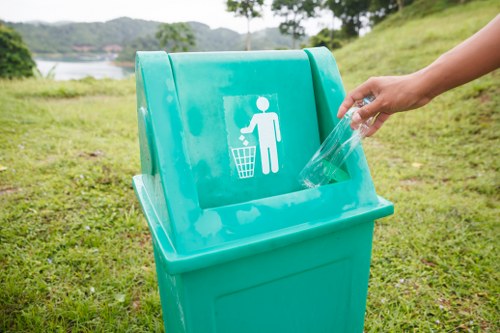 Waste handling procedures adopt the waste hierarchy and regulatory compliance for disposal. All waste streams are classified, recorded and transferred with the appropriate documentation. Our teams are trained to prevent pollution incidents, use spill kits for liquid contaminants and report any environmental concerns immediately. The policy ensures that materials destined for recycling are separated at source where practicable and that hazardous items are transferred only to authorised facilities in the wider waste removal service area.
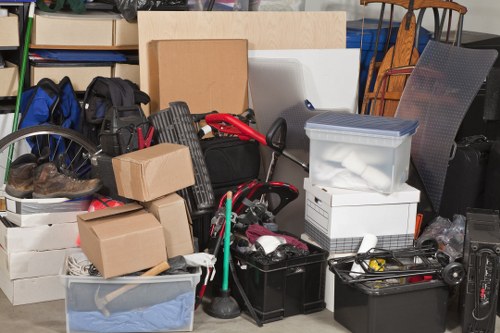 In the event of incidents or emergencies — injury, spill, fire or suspected hazardous substance exposure — clear reporting and response protocols activate. First aid provision, emergency contacts and incident reporting forms are available on-site. All incidents are investigated to identify root causes and to implement corrective actions. We maintain records of incidents, near misses and remedial actions to support continuous improvement.
Monitoring, review and continual improvement are integral. We perform regular audits, site inspections and performance reviews to ensure the policy is effective across our rubbish company service area. Changes in legislation, equipment or service delivery models prompt a review and update of risk assessments and operating procedures. Staff are consulted on safety matters and encouraged to contribute to safer working methods and innovation.
Policy enforcement includes disciplinary measures for deliberate non-compliance and positive reinforcement for safe behaviour. Leadership demonstrates commitment through visible participation in safety activities, allocation of resources and transparent reporting. Our commitment extends to clients and partners: we request cooperation with access, parking and site safety requirements to support safe, efficient clearances and responsible waste management across our service area.
This health and safety policy is owned by company management and is reviewed at least annually or sooner following a significant incident, legislative change or organisational change. It sets out clear expectations that everyone associated with Flat Clearance Ealing will work to maintain a safe, healthy and environmentally responsible approach to flat clearance, rubbish removal and waste handling within the operational service area.